A referral marketing program is a structured system that encourages your existing customers to recommend your business to people they know, typically in exchange for a reward. For small businesses, referral programs are one of the most efficient and cost-effective growth channels available --- yet most never formalize the process beyond hoping satisfied customers will spread the word on their own.
The reality is that happy customers are often willing to refer, but they need a clear reason and an easy mechanism to do so. A well-designed referral program provides both. This guide walks through everything you need to build a referral marketing program from scratch: the incentive structures that work, the step-by-step setup process, how to automate the moving parts, and how to measure whether your program is actually driving results.
Why Referral Marketing Works
Word-of-mouth has always been the most trusted form of marketing, and the data backs it up. According to Nielsen, 92% of consumers trust recommendations from people they know over any other form of advertising. Referred customers also convert at higher rates, spend more, and stay longer.
Here is what makes referrals uniquely powerful for small businesses:
- Higher conversion rates. Referred leads convert at 3 to 5 times the rate of leads from paid advertising, because trust is already established before the first interaction.
- Lower acquisition costs. The cost of acquiring a referred customer is typically 50-70% less than acquiring one through paid channels. Your reward to the referrer is almost always cheaper than a comparable ad spend.
- Better lifetime value. Research from the Wharton School of Business found that referred customers have a 16% higher lifetime value than non-referred customers. They churn less and spend more over time.
- Compounding growth. Each referred customer becomes a potential referrer themselves, creating a growth loop that accelerates over time rather than requiring constant ad budget increases.
Referral marketing also ties directly into customer retention. The act of referring strengthens the referrer’s own loyalty to your business --- a psychological phenomenon known as the commitment-consistency principle. When someone publicly recommends your brand, they become more invested in it.
The Anatomy of a Referral Program
Before diving into setup, it helps to understand the core components that every referral program needs.
The Incentive
This is what motivates someone to refer. It could be a discount, a cash reward, a free month of service, or store credit. The incentive needs to be valuable enough to prompt action but sustainable enough for your margins.
The Process
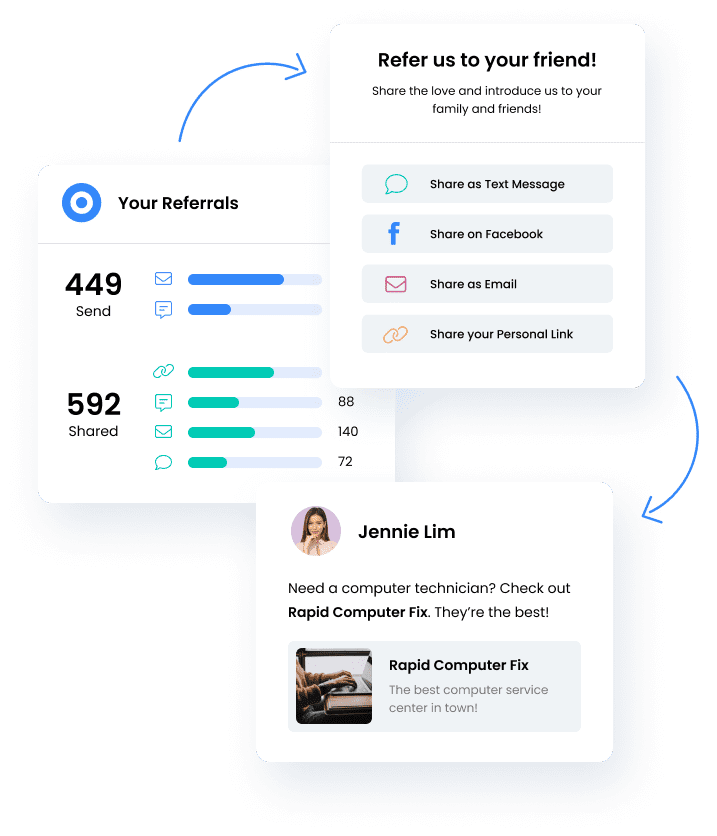
How does someone actually make a referral? The process should be as simple as possible. That means a unique referral link or code, a shareable message, and a clear landing page where the referred person can take action.
The Tracking System
You need a way to attribute each new customer back to the person who referred them. Without reliable tracking, you cannot reward referrers accurately, and the program loses credibility.
The Communication
Customers need to know your referral program exists, how it works, and what they earn. This means email campaigns, in-app messaging, social mentions, and potentially SMS outreach to promote the program at the right moments.
Types of Referral Incentive Structures
Not all referral incentives work the same way. The right structure depends on your business model, average transaction value, and customer behavior. Here is how the most common structures compare:
| Incentive Structure | How It Works | Example | Best For |
|---|---|---|---|
| Double-sided | Both the referrer and the referred person receive a reward | ”Give $25, get $25” | Subscription services, SaaS, recurring revenue businesses |
| Referrer-only | Only the person making the referral receives a reward | ”$50 credit for every friend you refer” | High-ticket services where the new customer does not need extra incentive |
| Tiered | Rewards increase as the referrer sends more people | ”1st referral = $25, 3rd = $50, 5th = $100” | Businesses wanting to encourage power referrers |
| Credit-based | Referrals earn account credit instead of cash | ”$10 credit toward your next purchase” | eCommerce, subscription boxes, SaaS platforms |
| Charitable | Referrals trigger a donation to a cause | ”$10 donated to [charity] for each referral” | Mission-driven brands, B-corps, community businesses |
| Access-based | Referrals unlock features, early access, or VIP status | ”Refer 3 friends, unlock premium features for a month” | SaaS, membership-based businesses |
Double-sided incentives tend to perform best for most small businesses because they reduce friction on both sides of the transaction. The referrer feels good about passing along a benefit to their friend, and the new customer has an immediate reason to take action.
Setting Up Your Referral Program Step by Step
Step 1: Define Your Goals and Metrics
Start by establishing what success looks like. Common referral program goals include:
- A specific number of new customers per month from referrals
- A target cost-per-acquisition that is lower than your paid channels
- A minimum referral conversion rate (referred leads who become paying customers)
- A revenue target directly attributable to the referral program
These goals will guide every subsequent decision, from incentive design to promotion strategy.
Step 2: Choose Your Incentive Structure
Select an incentive that aligns with your business model. Consider these guidelines:
- For services under $100/month: A credit or percentage discount works well (e.g., “Get 20% off your next month”)
- For high-ticket services: Cash rewards or significant credits create enough motivation (e.g., “$100 for each referral who signs up”)
- For recurring revenue businesses: Offer ongoing value like a free month or account upgrade
Whatever you choose, make sure the math works. Calculate the lifetime value of an average customer, then set your referral reward at a fraction of that. If your average customer is worth $2,000 over their lifetime, a $50-100 referral reward is easily justified.
Step 3: Build the Referral Mechanism
Your referral process needs three things:
- Unique referral links or codes for each customer so you can track attribution
- A landing page where referred prospects arrive, with clear messaging about the offer
- A sign-up or purchase flow that captures the referral source
Keep the sharing process simple. Provide pre-written messages that customers can share via email, text, or social media with a single click.
Step 4: Create Your Program Messaging
Write clear, concise copy that explains:
- What the referrer earns
- What their friend receives (if double-sided)
- How the process works (in three steps or fewer)
- Any terms or conditions (expiration dates, eligible products, etc.)
Avoid jargon. “Share your link. Your friend gets $25 off. You get $25 credit.” is far more effective than a paragraph of explanation.
Step 5: Promote the Program
A referral program that nobody knows about will not generate results. Promote it through:
- Welcome emails: Introduce the program during onboarding while customer enthusiasm is highest
- Post-purchase follow-ups: Ask for referrals after a positive experience or successful outcome
- Email newsletters: Include a referral reminder in your regular communications
- SMS campaigns: A well-timed text message with a referral link can drive immediate action
- In-product or in-service mentions: Reference the program during customer interactions
- Social media: Share referral program details and success stories
Step 6: Launch, Monitor, and Iterate
Start with a soft launch to a segment of your best customers. Collect feedback, monitor participation rates, and adjust before rolling out broadly. Pay attention to where referrals stall --- if people share but their friends do not convert, the landing page or offer may need work. If people do not share at all, the incentive or promotion strategy needs rethinking.
Automating Your Referral Workflows
Manual referral tracking breaks down quickly. Once you have more than a handful of active referrers, spreadsheets and sticky notes will not cut it. Workflow automation turns your referral program into a system that runs with minimal oversight.
Key Workflows to Automate
Referral link generation. When a customer reaches a trigger point (such as completing their first purchase or leaving a positive review), automatically generate and send their unique referral link.
Referral notification. When someone uses a referral link, send an automated notification to the referrer so they know their effort is paying off. This encouragement increases the likelihood they will refer again.
Reward fulfillment. When a referred customer completes the qualifying action (purchase, sign-up, subscription), automatically apply the reward to both parties. Delays in fulfillment erode trust in the program.
Follow-up sequences. If a referred prospect visits your landing page but does not convert, trigger a nurture sequence with additional information and a reminder of the offer.
Program reminders. Send periodic reminders to customers who have not referred anyone recently, especially after positive interactions like a completed project, a five-star review, or a support resolution.
Using SMBcrm to Power Your Referral Program
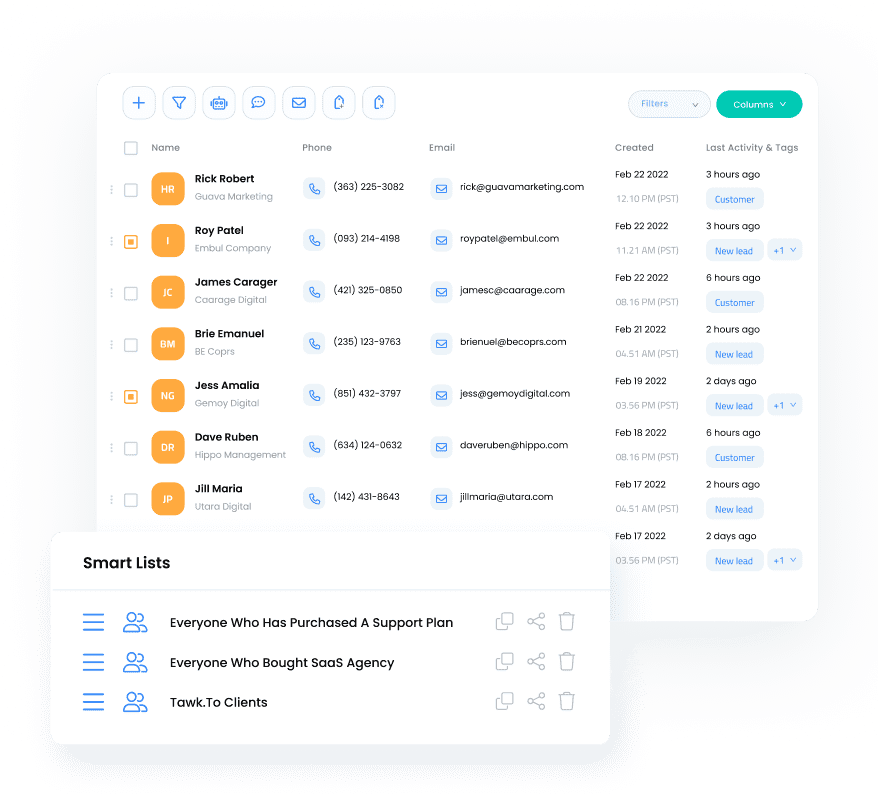
SMBcrm’s automation workflows make it straightforward to build these referral processes without stitching together multiple tools. You can create trigger-based workflows that send referral invitations at the right moment, track when referred contacts enter your pipeline, and automatically apply credits or notify your team when a referral converts. The unified inbox keeps all referral-related communications (email and SMS) in one place, so nothing gets lost. Combined with pipeline tracking, you can see exactly which stage each referred lead is in and what revenue your program is generating.
Measuring Referral Program Success
A referral program without measurement is a guessing game. Track these metrics from the start:
Core Metrics
- Referral rate: The percentage of customers who make at least one referral. A healthy program sees 5-15% participation.
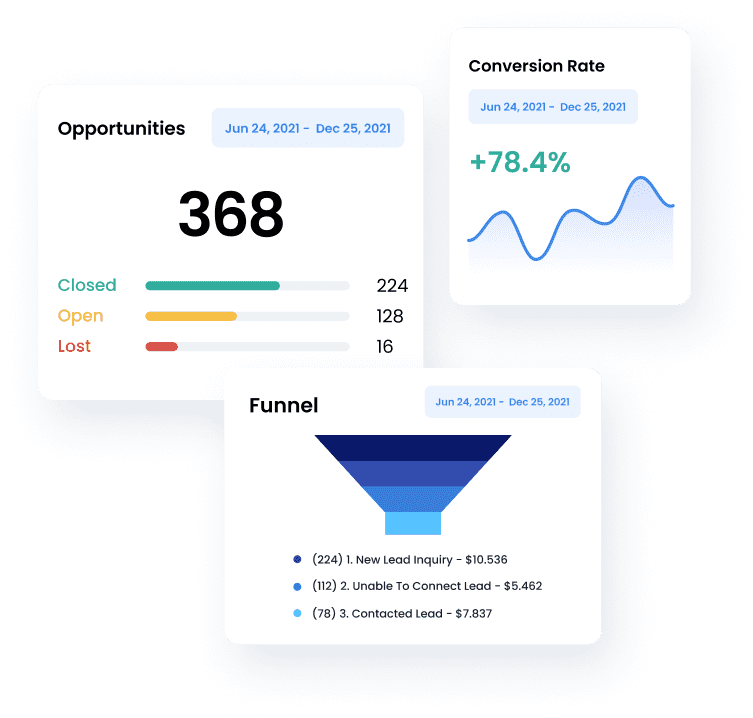
- Referral conversion rate: The percentage of referred prospects who become paying customers. This should be significantly higher than your other channels.
- Cost per referred acquisition (CPA): The total cost of your referral rewards divided by the number of new customers acquired. Compare this to your paid channel CPA.
- Revenue per referral: Average revenue generated by each referred customer over their first 12 months.
- Time to conversion: How long it takes a referred lead to become a customer. Referred leads typically convert faster than cold leads.
Advanced Metrics
- Referral program ROI: Total revenue from referred customers minus total program costs (rewards, software, administration), divided by total program costs.
- Virality coefficient: The average number of new customers each existing customer generates through referrals. A coefficient above 1.0 means your program is self-sustaining.
- Top referrer analysis: Identify your most active referrers and what they have in common. This informs which customer segments to target with referral promotions.
Review these metrics monthly. Look for trends rather than isolated data points. A declining referral rate might signal that your incentive has lost its appeal, while a low conversion rate on referred leads could point to a disconnect between what the referrer promises and what the prospect experiences.
Frequently Asked Questions
When is the best time to ask customers for referrals?
The best time is immediately after a positive outcome --- a successful project completion, a complimentary review, a support issue resolved quickly, or a milestone reached. These “peak satisfaction” moments are when customers are most inclined to recommend your business. Avoid asking before the customer has experienced real value, as premature requests can feel presumptuous and damage the relationship.
How much should I spend on referral incentives?
A common benchmark is 10-25% of the customer’s first purchase value or first month of subscription revenue. The key constraint is your customer lifetime value (LTV). As long as the referral reward plus your cost to serve the new customer is well below the expected LTV, the program is profitable. Start conservatively and increase incentives if participation is low.
What if referred customers churn quickly?
This usually signals a targeting or expectations problem. If referrers are sending people who are not a good fit for your product or service, consider adding qualification criteria (e.g., the referred customer must remain active for 30 days before the reward is issued). You can also adjust your messaging to help referrers identify the right people to invite, rather than incentivizing volume at the expense of quality.
Do referral programs work for B2B businesses?
Yes, and they can be even more effective than in B2C contexts. Business decision-makers rely heavily on peer recommendations when evaluating vendors. B2B referral incentives tend to be larger (reflecting higher contract values) and may include account credits, extended trial periods, or co-marketing opportunities rather than cash rewards. The key is making the referral process easy and professional, since B2B referrers are putting their own reputation on the line.
Ready to Launch Your Referral Program?
SMBcrm gives you the automation workflows, pipeline tracking, and unified communications to run a referral program that scales with your business --- no extra tools required.